The Financial Implications of Using Payday Loans for High-Interest Debt Consolidation

David Sterling
Managing Editor, Borrowing · Updated October 2026

David Sterling
Managing Editor, Borrowing · Updated October 2026
Imagine you are staring at a $1,500 credit card balance with an APR of 24%. You feel the weight of the monthly interest accruing, and then you see an advertisement: 'Clear your debt today for one small fee!' It sounds like a lifeline. However, in 2026, financial experts warn that using high-cost short-term loans to manage existing credit card debt is often like trying to put out a fire with gasoline. Instead of solving the problem, you may simply be accelerating the rate at which your debt grows.
The math behind this decision is stark. While a standard credit card might carry an interest rate between 18% and 30%, many payday loans carry APRs that range from 300% to as high as 590%. When you take out a payday loan to pay off a credit card balance, you are essentially performing an 'interest rate arbitrage' in the wrong direction. You are moving debt from a relatively low-cost environment to a high-cost one.
This article will help you navigate the complex landscape of debt management. We will break down the mathematical realities of these loans, compare different consolidation strategies, and provide a framework for deciding which path is actually beneficial for your long-term financial health. By understanding the real implications in 2026, you can avoid common pitfalls that lead many borrowers into a cycle of perpetual repayment.
To understand why this strategy fails, we have to look at the concept of interest rate arbitrage. In a successful consolidation scenario, you move debt from a high-interest source to a lower-interest source. For example, if you owe $2,000 on a card with 28% APR and consolidate it into a personal loan with 12% APR, you save hundreds of dollars in interest over the life of that loan.
Now, consider the alternative scenario involving a payday loan. If you attempt to use a short-term loan to cover a debt, the math shifts dramatically. Let's look at a concrete example: Suppose you have $1,000 in credit card debt at 25% APR. Over one year, that debt accrues roughly $250 in interest if no payments are made. If you instead take out a payday loan for that same $1,000 to 'pay off' the card, and that payday loan has an APR of 400%, your interest cost for that same amount jumps from $250 to $4,000 over a year. You have effectively increased your debt burden by sixteen times.
This is why financial advisors often warn against using high-interest capital to pay off lower-interest obligations. The primary goal of consolidation should always be the reduction of the total interest paid, not just the immediate removal of a single line item from your statement. When you focus only on the 'feeling' of being debt-free today, you may overlook the mathematical reality that ensures you will be deeper in debt tomorrow.
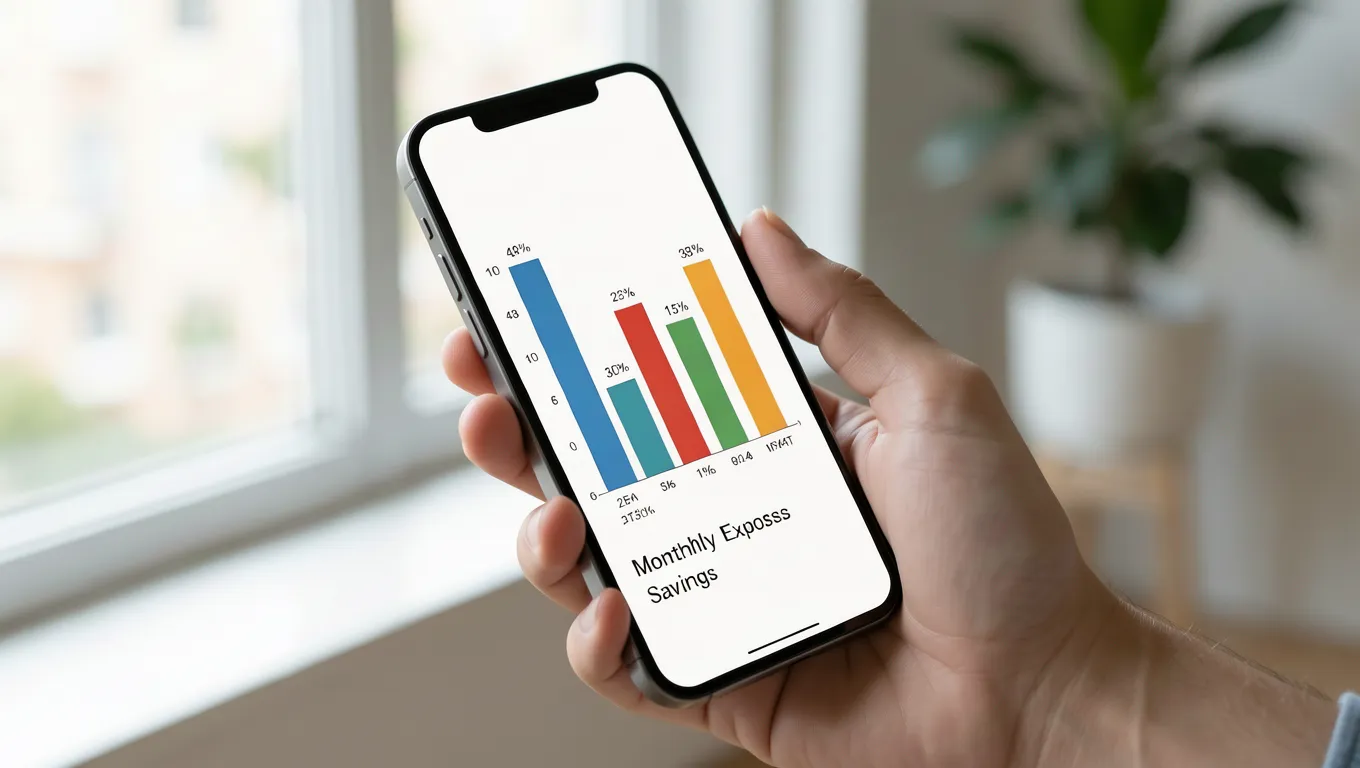
When evaluating your options, it is essential to look at the 'spread'—the difference between what you are currently paying and what a new loan would cost. Most people mistakenly believe that because a payday loan provides cash instantly, it is an efficient tool for debt management. However, efficiency in finance is measured by the total cost of capital over time.
Let's compare two common scenarios using real-world numbers:
The trade-off is simple but brutal: Credit cards offer revolving access with moderate interest rates, whereas payday loans offer immediate liquidity with extreme interest costs. While credit cards can be dangerous if used for lifestyle spending, they are almost always mathematically superior to short-term high-interest loans when used as a tool for debt management.
The most dangerous aspect of using payday loans for consolidation is the phenomenon known as the 'revolving door.' Because these loans are designed to be repaid in full upon your next paycheck, they do not allow for a gradual reduction of principal. If you use a $500 payday loan to pay off a $500 credit card balance, you have cleared the card, but you now owe $500 plus significant fees and interest just two weeks later.
When that payday loan comes due, many borrowers find they do not have the cash available because it was already used for other expenses. At this point, lenders often offer a 'rollover' or a new loan to pay off the old one. This is where the debt spiral begins. According to historical data frequently cited by the CFPB (Consumer Financial Protection Bureau), a significant percentage of payday loan borrowers end up taking out multiple loans just to cover the interest on previous ones.
This creates a situation where you are no longer paying down any actual debt; you are simply paying for the privilege of delaying your obligations. To avoid this, never use a high-interest product to pay off a lower-interest product unless it is an absolute emergency involving essential survival needs like food or housing. Debt consolidation should be a tool for stability, not a mechanism for perpetual movement.
If you are feeling overwhelmed by high-interest debt in 2026, there is a more effective way to move forward. Instead of looking for immediate cash, look for structural changes to your debt. A structured approach allows you to regain control without sacrificing your future income to interest payments.
Follow this decision framework to determine your best path:
By following these steps, you move from a reactive state to a proactive one. You are no longer reacting to a due date; you are executing a plan. This level of clarity is what separates successful debt management from the cycle of borrowing.
There are nuances to high-interest lending that many consumers miss until they are already deep in the process. One such factor is the impact on your credit score and your ability to secure traditional financing in the future. When you engage in frequent short-term borrowing, it can signal 'credit hunger' to potential lenders, which may negatively affect your ability to get a mortgage or an auto loan later.
Additionally, there are hidden costs that don't appear on the initial advertisement. For example:
Many people assume that a small $30 fee on a $500 loan is negligible. However, when that fee is applied weekly or bi-weekly, the compounding effect is devastating. In 2026, as digital lending becomes even more accessible, it is vital to look past the 'easy' interface and examine the total cost of credit over the entire life of the debt.
For most people, a traditional personal loan is the superior choice for consolidation. Unlike payday loans, which are designed to be repaid almost immediately, personal loans are installment-based. This means they provide a predictable monthly payment and a clear end date for your debt.
Let's look at one final comparison of total cost. If you have $5,000 in high-interest credit card debt (24% APR) and you consolidate it into a 36-month personal loan at 12% APR, your monthly payment is roughly $166. Over the three years, you will pay approximately $978 in total interest. Compare this to the cost of trying to chip away at that debt using short-term loans or even just paying only the minimums on the credit card; the savings are substantial.
The key is discipline. A personal loan works because it forces a structured repayment schedule. It provides the breathing room needed to rebuild your finances rather than the pressure of an impending payday deadline. While there is no magic solution to debt, choosing the right mathematical instrument is the first and most important step toward financial freedom.