The Connection Between Your Credit Utilization Ratio and Short-Term Loan Accessibility

David Sterling
Managing Editor, Borrowing · Updated October 2026

David Sterling
Managing Editor, Borrowing · Updated October 2026
Imagine this: You have a high FICO score of 740, yet every time you apply for a short-term loan in 2026, the answer comes back as 'denied' or 'higher rate than expected.' This discrepancy is often caused by something that has nothing to do with your payment history and everything to do with how much of your available credit you are currently using. In the financial world, this is known as your credit utilization ratio. While many borrowers focus solely on their total score, lenders look deeper at the composition of your debt. For example, a borrower might see APRs ranging from 6% to 36% depending on their profile, but even with a high score, a high utilization can push you into a higher risk category.
Understanding this metric is vital because it acts as a real-time indicator of your financial breathing room. While a credit score tells a lender if you have been responsible in the past, your utilization ratio tells them how much pressure your current finances are under right now. A borrower might seek a loan for $1,000 to $5,000 to cover an unexpected expense, but if their credit cards are already near their limits, that lender may see them as too risky for even a short-term arrangement.
This article will help you decode the complex relationship between how you use your existing credit and your ability to secure new funding. We will walk through the math behind the numbers, explain why underwriters react so strongly to high percentages, and provide a practical framework for improving your profile before you hit that 'apply' button. By understanding these mechanics in 2026, you can approach borrowing with much greater confidence and clarity.
To understand how this affects your ability to secure funding, we first have to look at the math. Credit utilization is calculated by taking your total credit card balances and dividing them by your total credit limits across all cards. For instance, if you have two credit cards with a combined limit of $10,000 and a total balance of $8,000, your utilization ratio is 80%. Even though you are making payments on time, that 80% signal tells lenders you might be leaning heavily on credit to manage daily expenses.
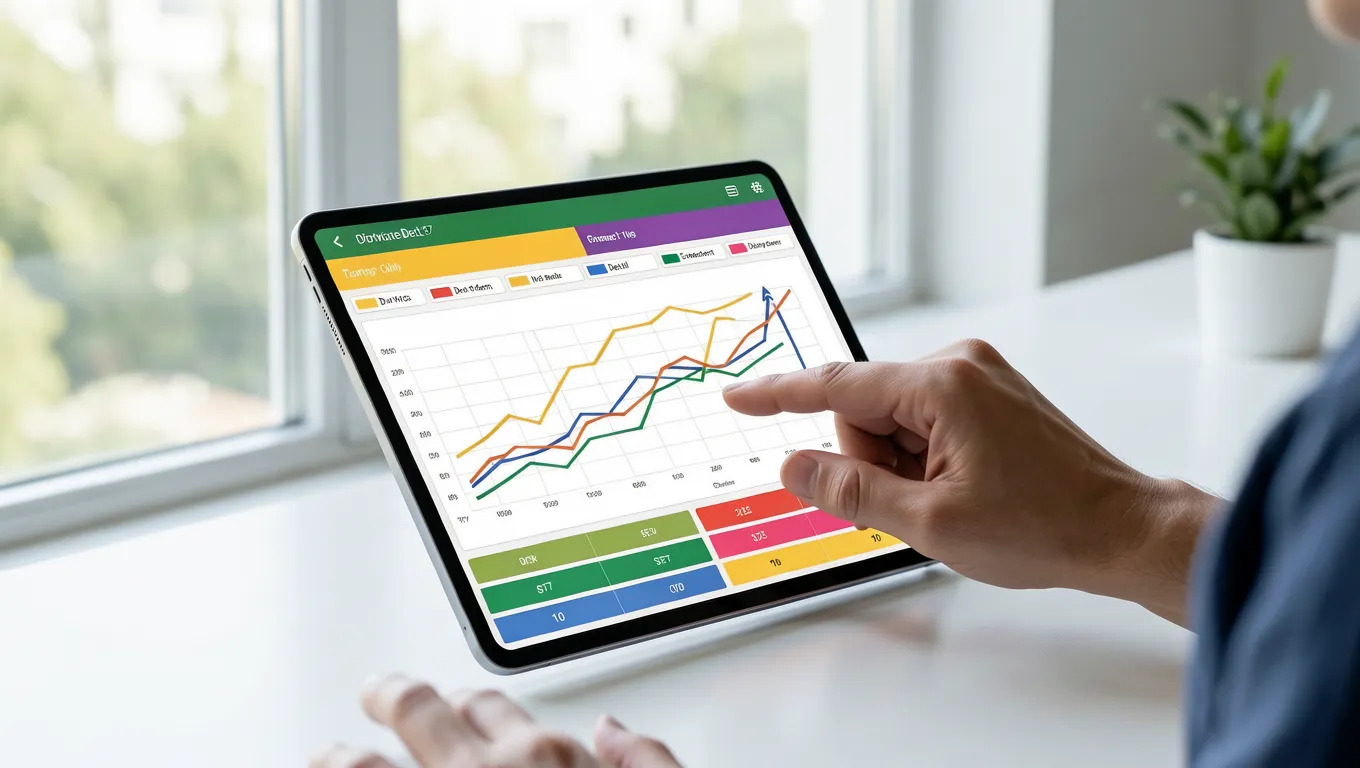
Lenders are in the business of managing risk. When they see high utilization, they aren't just looking at a number; they are looking at a behavior pattern. According to data often cited by organizations like Experian, individuals with higher revolving debt levels relative to their limits are statistically more likely to default on new obligations. This is because high utilization often indicates that a borrower is using credit to bridge the gap in their monthly cash flow rather than for large, planned purchases.
If you were to apply for a $3,000 short-term loan in 2026, the lender might run a soft or hard pull and see that your cards are near capacity. They may conclude that adding another monthly payment—even if it is only $150 per month—could be the tipping point for your budget. This is why you might find yourself offered a higher interest rate to compensate for that perceived risk, or why you might simply be denied altogether. The lender isn't saying you won't pay them back; they are saying it is statistically more likely that you might struggle.
It is vital to understand how different types of debt interact with your profile. There is a fundamental difference between revolving debt and installment debt. A credit card is 'revolving'—you can borrow, pay back, and borrow again on a continuous cycle. A short-term personal loan is 'installment'—it has a fixed end date and a set number of payments.
If you are planning to apply for a loan in 2026, don't wait until the day before. You need a proactive strategy. First, audit all your current accounts and find out exactly what your total limits and balances are. Second, prioritize paying down any card that is above 30% utilization; this is often considered the threshold where scores start to take a hit.
A concrete decision framework for managing this involves three steps:
1. Identify High-Impact Cards: Focus on cards with high limits but high balances, as these move the needle most significantly.
2. The 'Avalanche' vs. 'Snowball' Choice: You can use the avalanche method (paying highest interest first) or snowball (lowest balance first). For utilization, the avalanche is often better for your wallet, while snowball provides quick psychological wins.
3. Request Limit Increases: While it sounds counterintuitive, asking for a higher limit without spending more can lower your ratio instantly. However, be careful, as some lenders may perform a hard inquiry to increase your limit, which could temporarily dip your score.
It is a common misconception that a high credit score guarantees a low interest rate or even an approval. In 2026, many lenders use 'alternative data' alongside traditional FICO scores. This might include your bank account history or how you manage utility bills. Even if your score is 750, if your utilization is at 95%, a lender may see you as a high-risk borrower for an installment loan.
Consider this scenario: A borrower seeks a $5,000 personal loan to consolidate debt. Their score is 720. However, their credit cards are maxed out. The lender sees that the borrower is already at their limit of what they can afford monthly. Even though the borrower's history of on-time payments is perfect, the capacity for more debt is low. This distinction between 'reliability' (paying on time) and 'capacity' (having room in your budget) is where most loan applications fail.
One of the most common mistakes people make when trying to clean up their credit profile is closing out old, unused credit cards once they have paid off the balance. While it feels like you are getting rid of debt, you might actually be hurting your ability to get a loan in 2026.
Closing an account reduces your total available credit, which immediately spikes your utilization ratio on your remaining cards. For example, if you have $10,000 in total limits and $2,000 in debt (20% utilization), and you close a card with a $5,000 limit that had a zero balance, your new ratio is $2,000 / $5,000 = 40%. You have effectively doubled your utilization without spending an extra cent.
Always keep old accounts open—even if they are dormant—to maintain the longevity of your credit history and a high total limit. This ensures that when you do apply for that short-term loan, your profile reflects both a long history of reliability and plenty of available credit headroom.