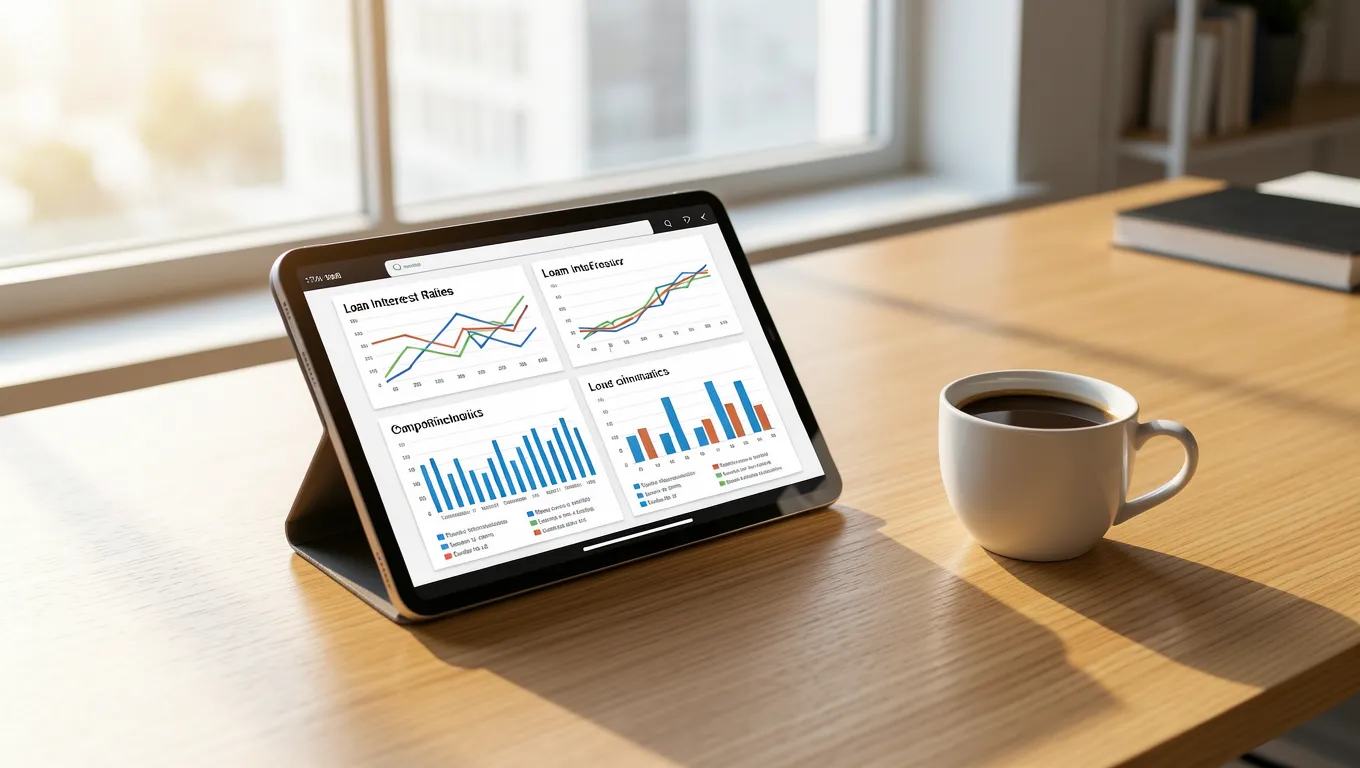
59 Cash makes it simple to evaluate multiple lenders in one place. Discover terms that fit your budget and life goals for 2026.
No hard credit pull · Takes 2 minutes
Won't impact your credit score
Provide basic information about your financial needs and credit profile to start the matching process.
View a curated list of lenders that may match your specific requirements for amount and term.
Select the offer that provides the best value for your situation and complete the application directly with them.
When you decide to apply here, you quickly realize that not all financing options are created equal. The primary benefit of choosing to compare personal loans is the ability to see a wide spectrum of market offerings without spending hours on individual applications. In 2026, the landscape for consumer credit continues to evolve, offering more specialized products ranging from fixed-rate installment loans to variable-rate options. By using a comparison tool like 59 Cash, you can potentially identify lenders that offer terms specifically tailored to your unique debt-to-income ratio and current financial standing.
It is important to recognize that the market typically features an APR range of 6%–36%, depending heavily on your credit profile and the lender's internal risk models. According to data often cited by the Consumer Financial Protection Bureau (CFPB), transparency in lending is vital; therefore, looking at the Annual Percentage Rate (APR) rather than just the base interest rate can save you significant money over the life of a loan. The APR includes not only the interest but also any potential origination fees or other costs that might be bundled into your borrowing arrangement.
Whether you are looking to consolidate high-interest credit card debt or fund a major home renovation, the act of comparing allows you to weigh the trade-offs between shorter repayment terms and lower monthly payments. For instance, while a 36-month term might offer more stability, a 60-month term could provide much-needed breathing room in your monthly budget. Understanding these nuances is the first step toward making an informed decision that supports your long-term financial health.
| Loan Type | Typical APR Range | Common Terms | Primary Use Case |
|---|---|---|---|
| Unsecured Loan | 6%–36% | 24-84 Months | Debt Consolidation |
| Secured Loan | 5%–25% | 36-72 Months | Home Improvement |
| Fixed-Rate Installment | 8%–30% | 12-60 Months | Emergency Expenses |
| Consolidation Loan | 7%–29% | 36-72 Months | Managing Multiple Debts |
| Specialty Personal Loan | 10%–35% | 12-48 Months | Major Life Events |
When you begin the process of evaluating different lenders, your eligibility will likely hinge on several key financial metrics. Lenders primarily look at your credit score and your debt-to-income (DTI) ratio to determine how much risk they are willing to take. A higher credit score, as reported by major bureaus like Experian or Equifax, often leads to more favorable interest rates and larger loan amounts. If your DTI is too high—meaning a large portion of your monthly income goes toward paying off existing debt—you may find it harder to qualify for the most competitive terms.
Beyond credit scores, lenders in 2026 are increasingly looking at alternative data points to assess stability. This can include your consistent employment history and even your utility payment patterns. It is crucial to understand that a no hard credit check inquiry during the initial comparison phase is a significant advantage, as it allows you to explore options without impacting your score. However, once you select an offer and move toward a formal application, most lenders will perform a full credit pull.
Another factor to consider is the distinction between secured and unsecured financing. An unsecured loan does not require collateral, making it easier to obtain but often resulting in higher interest rates. Conversely, a secured loan uses an asset (like a vehicle or savings account) as backing, which could potentially* lower your rate but carries the risk of losing that asset if you default. Being aware of these differences is essential when you are actively comparing personal loans to ensure the structure matches your comfort level and financial capacity.
One of the most common mistakes borrowers make is focusing solely on the monthly payment amount rather than the total cost of borrowing. To truly compare personal loans effectively, you must look at the Annual Percentage Rate (APR). While the interest rate tells you the cost of the principal, the APR provides a more holistic view by including origination fees and other mandatory costs. According to guidance from the Federal Reserve, understanding this distinction is vital for preventing unexpected financial strain during your repayment period.
In 2026, many lenders offer various terms that can significantly impact your long-term interest expense. For example, a loan with a 3% lower interest rate might seem attractive, but if the term is twice as long, you could end up paying thousands more in total interest over the life of the loan. It is wise to run several scenarios: one with a higher monthly payment and shorter term, and another with a lower payment and longer term. This helps you visualize how your cash flow will be affected both now and years down the line.
Furthermore, always inquire about prepayment penalties. Some lenders charge a fee if you decide to pay off your loan early, which can negate the benefits of making extra payments toward your principal. When comparing personal loans, looking for lenders that allow for penalty-free early repayment can be a massive advantage for anyone planning to accelerate their debt freedom.
Your credit score acts as your financial reputation in the eyes of modern lenders. As you browse through various options, it is helpful to know that a 'good' score might qualify you for standard rates, while an 'excellent' score could unlock premium interest rates and higher limits. Because different lenders use different scoring models (such as FICO vs. VantageScore), your experience when comparing personal loans may vary depending on which bureau the lender prioritizes.
Maintaining a healthy credit utilization ratio—the amount of revolving credit you are using compared to your total limits—is another critical component. High utilization can suppress your score even if you have never missed a payment. If you're planning to apply for a loan in 2026, many experts suggest waiting until you have optimized this ratio to ensure you are seeing the best possible offers during your search.
Finally, remember that your financial history is not static. A single late payment can impact your ability to secure low-interest financing for years. Therefore, when comparing personal loans, it's not just about finding the cheapest money today; it's about ensuring you have a stable foundation that allows you to manage that debt without compromising your future creditworthiness.
You may also want to review comparison rates and best unsecured personal loans online before deciding what works best.
Review your reports from TransUnion or Equifax to ensure there are no errors that could negatively impact your rates.
Always use the APR as your primary metric for comparing the true cost of different loan offers.
Calculate how an origination fee will affect your total amount received versus the amount you actually owe.
Ensure the lender does not charge a prepayment penalty if you plan to pay off the loan early.
Your data is protected with industry-leading encryption standards.
Get a clear view of your potential options in just minutes.
Access to a wide variety of US-based lenders for diverse needs.
We focus on connecting you with clear, understandable terms.
Adjust the sliders to see an instant estimate. Actual rates depend on your credit profile.
* Estimate only. Actual rate and terms depend on lender approval.
Estimated Monthly Payment
$332.14
per month for 36 months
No impact on your credit score